In modern agriculture, the use of precision technology is no longer the privilege of the happy few.  From small to large scale farming across the globe, help from the universe is widely accepted. How geospatial tech is transforming agriculture, from soil to satellite.

By Heiko Lohre
Senior manager emerging business development, Topcon

Precision technology has significant potential to make life easier for farmers, helping them overcome market challenges by working smarter across all of their operations. The industry has a lot to contend with: input costs, while declining, haven’t returned to their baseline before the energy price spike; pressure to sustainably deliver higher yields and feed a growing population also remains significant.

And then there’s tightening environmental regulations. In short, farmers need to do more with less.

To stay competitive, farms of all sizes are turning to geospatial technologies to find gains in efficiency, productivity, and sustainability that will help them meet these challenges. Tools powered by Global Navigation Satellite Systems (GNSS), Real-Time Kinematic (RTK) positioning, and high-resolution aerial or satellite imagery are helping farmers map their fields with pinpoint accuracy and make real-time, data-driven decisions about soil, crops, and resources.

For both individual farms and the sector as a whole, these technologies are making a big difference. But to realize their full potential, adoption must be widespread, supported by smart data sharing policies and proactive collaboration between manufacturers, policymakers and farmers.

Enabling progress

Farmers have always relied on lessons from previous seasons. Today, precision agriculture lets farmers dig deeper than ever, combining historical crop data with real-time performance indicators that allow farmers to go into the following year armed with the full picture.

Crop health monitoring solutions such as CropSpec measure plant reflectance to determine chlorophyl content and nitrogen concentration, and feed this data back into detailed field maps that allow farmers to know exactly what their crops need and when. Combined with yield monitoring tools, the technology adds empirical data to the experience of farmers who are finetuning their plans, while simultaneously enabling them to act quickly when the unexpected happens.

Upping accuracy

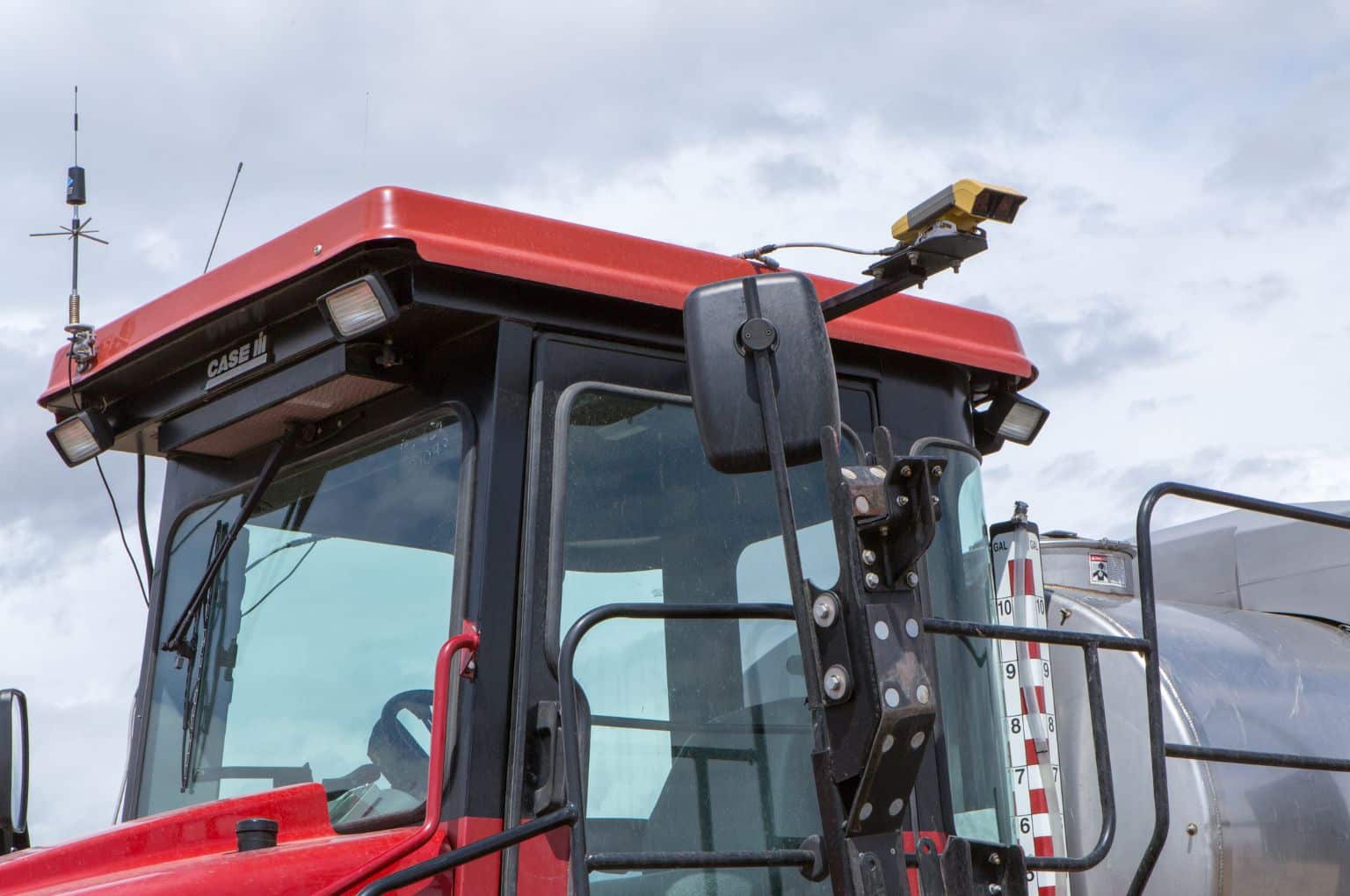
Guidance systems powered by high-accuracy GNSS signals and supported by RTK correction have redefined what precision means for machinery including tractors, sprayers, spreaders and harvesters. Using services like Topnet Live, farmers can simultaneously access the survey-grade accuracy of high-precision RTK correction with the broad and consistent coverage of precise point positioning (PPP) networks, meaning wherever they are, their machines will stay connected regardless of the available local networks.


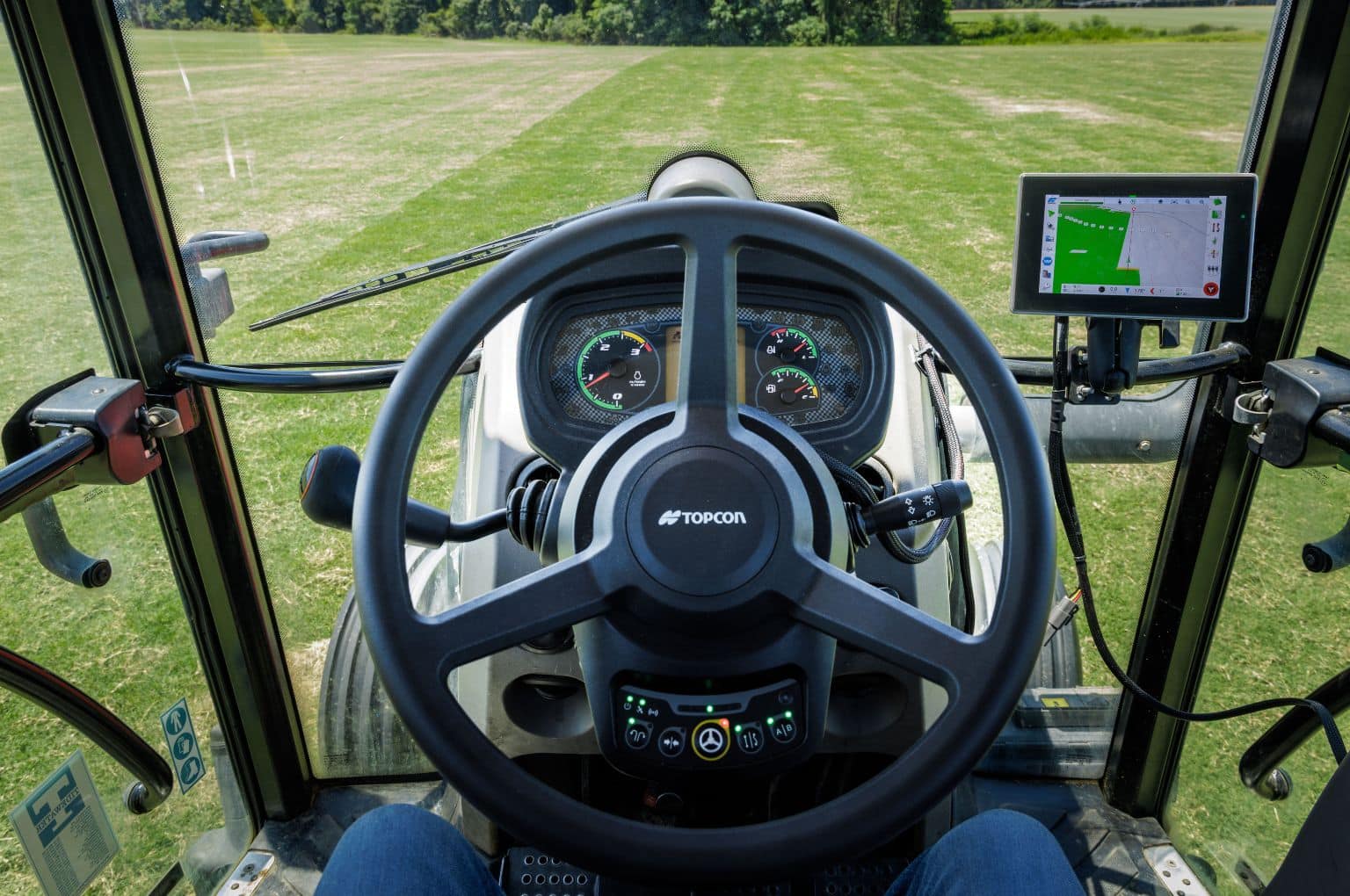
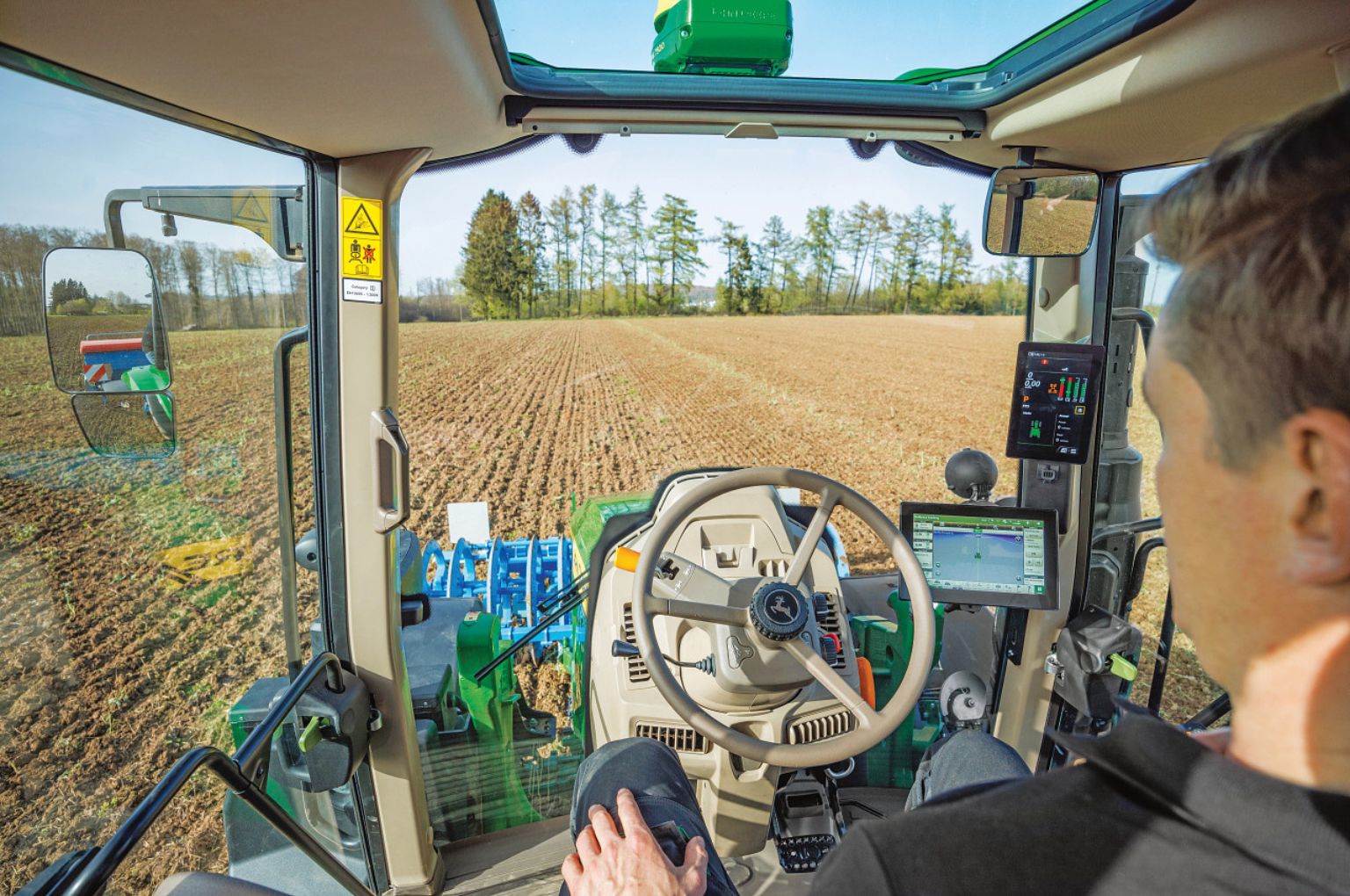
In the cab, data from these guidance systems feeds position-based steering systems to enable more accurate work in the field. The latest solutions offer different guidance patterns to fit the job at hand, and farmers can view multiple guidance paths from different machines working simultaneously, helping everyone pull in the same direction.

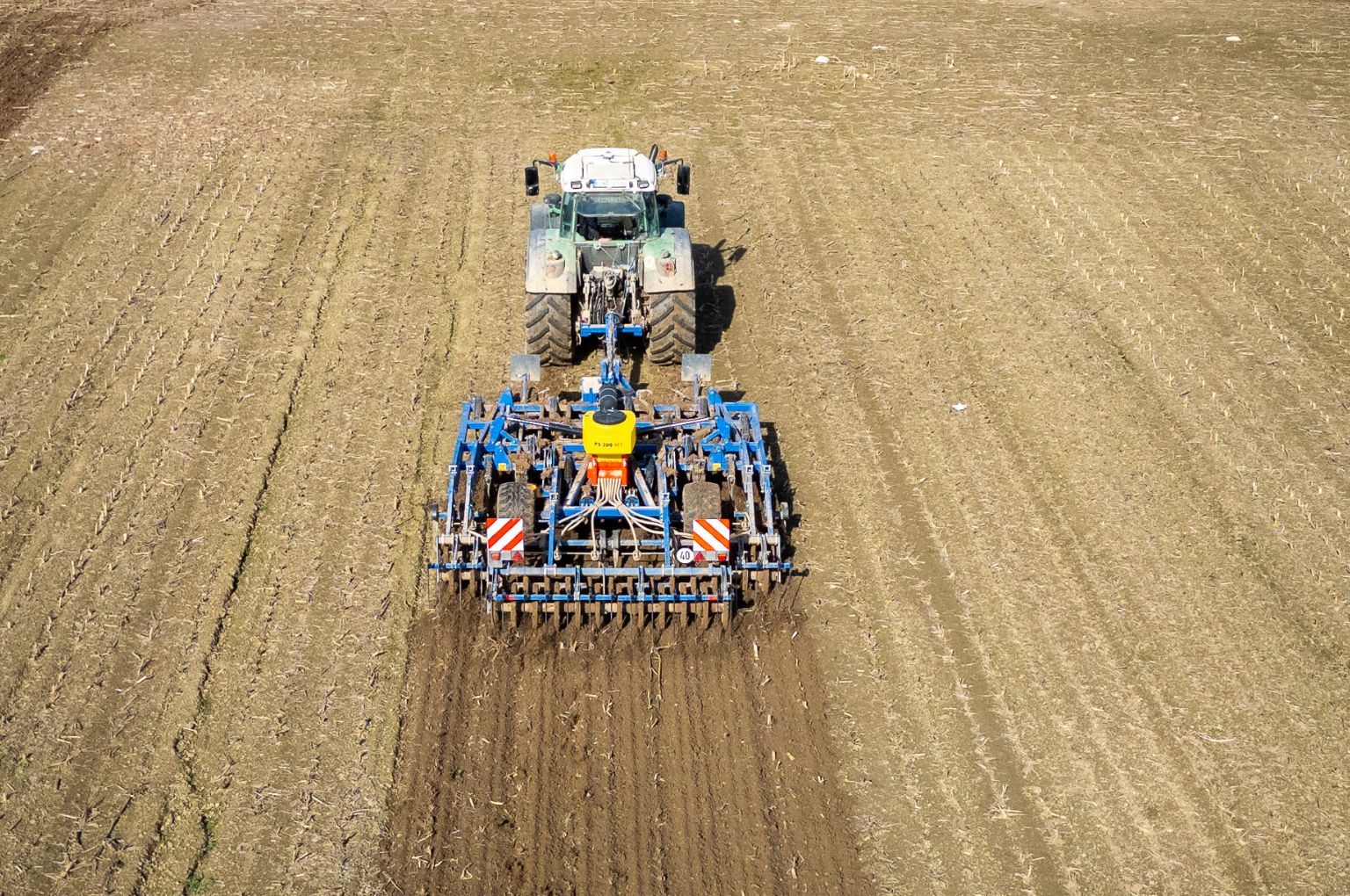
Value Line is an autosteering solution that enables farms of all sizes to make the sorts of marginal gains that make all the difference in a difficult market. For smaller operations such as family farms, consistently eliminating just a foot of overlap is hugely significant. For example, a one-foot overlap from a 100-foot cultivator in a large farm is a wastage of one per cent. At a smaller scale, a one-foot overlap on a 30-foot cultivator results in a three per cent wastage: a significant loss for any business. While similar savings may seem less important on a larger farm, there are serious economies of scale to be had when this technology is embraced across numerous machines.

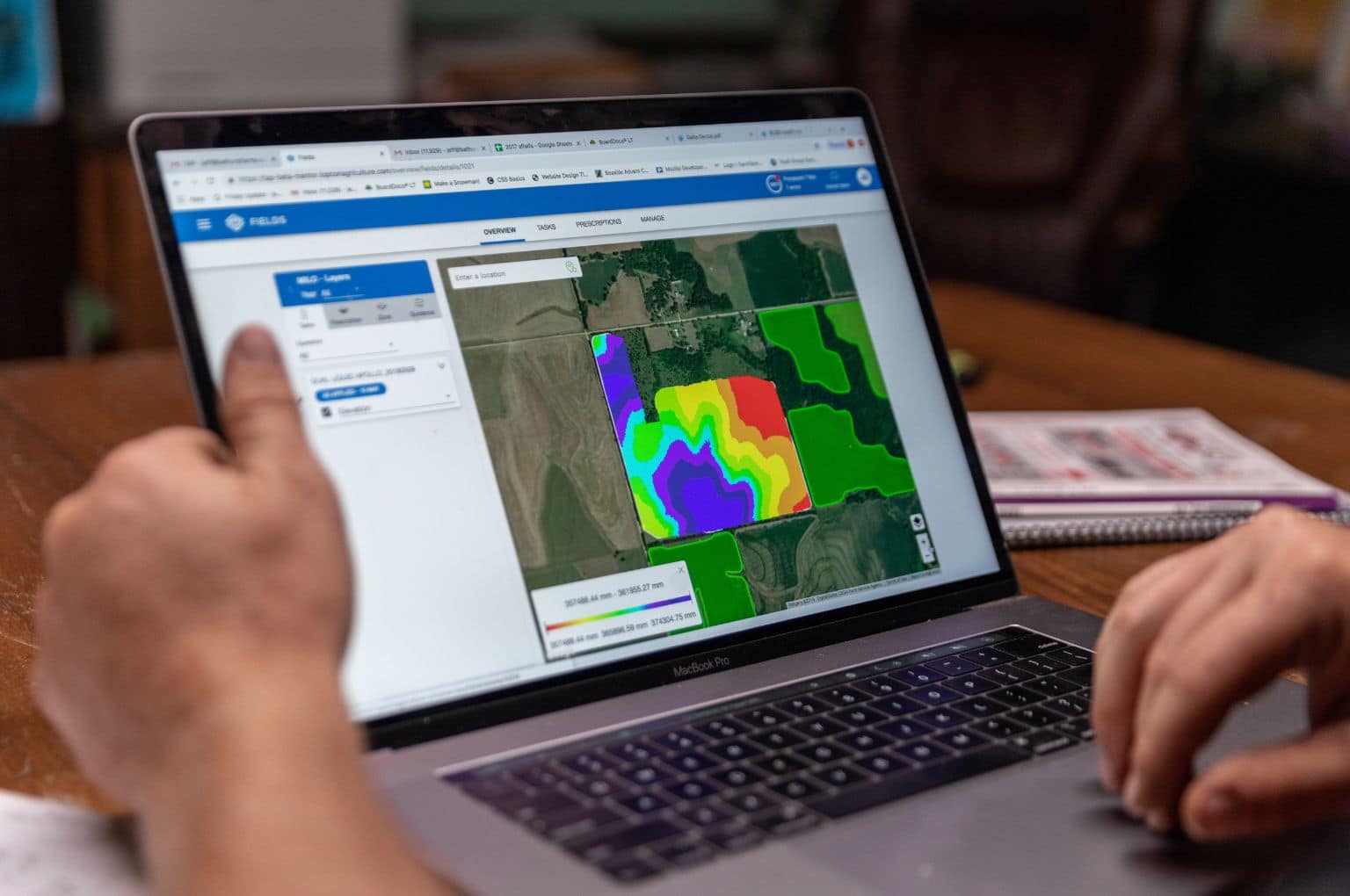
These services are most effective when used with farm management software such as TAP. The platform brings together insights from across a farmer’s operations, giving them a broad but detailed view of what’s going on and highlighting opportunities to reduce input usage and increase efficiency and productivity. The end result is a smarter way of working that allows farmers to react faster and more effectively to whatever the season throws their way.

Sharing is caring

Advances in geospatial technology have come in tandem with a boom in data availability. As GNSS coverage comes to more regional markets with increasingly competitive pricing, more farmers can leverage geospatial data to upgrade their operations. The opportunity is bigger than simply improving the accuracy and efficiency of individual farms; by putting their heads and their data together, farmers, policymakers, and manufacturers can build a smarter global farming industry.

With the support of a robust and realistic data-sharing agreement, farmers can pool information such as yield data, soil conditions, and crop performance, enabling everyone to make better decisions in a better-connected sector. A new UN report gives one example of how this could work, promoting the idea of a centralized UN imagery procurement hub for satellite outputs. 

This allows farmers around the world to tap into the power of geospatial tech, no matter where they’re working. Similar efforts are also underway in the EU, where the European Commission is invested in driving digitalization of agriculture across the bloc. This includes bringing together several key players from across the industry to create a EU Code of Conduct for agricultural data sharing. The rollout of the Common European Agricultural Data Space in 2024 was another significant step forwards, but farmers also need support to adopt and get up to speed with the technology.

A stronger status quo

Agriculture is under unique pressure right now, as macroeconomic conditions, sustainability regulations and a growing population come together to demand more from farmers. With the help of precision technology farmers can build a more efficient, adaptive, and resilient baseline. The next era of agriculture will be digitally driven and data informed.

Highlights

“I wanted to disrupt the industry”

Craig Rupp is a self-made man. The founder and owner of US based Sabanto, has a clear vision on automation in agriculture. “I wanted to disrupt the industry,” he says. And so, he did. Craig developed the Steward retrofit kit, making tractors operate autonomously. It eases the workload for farmers. B...

“Agritechnica Asia live” is approaching

From 24-26 August, Agritechnica Asia Live 2022 will be held in Can Tho City, Vietnam. At Agritechnica Live, machinery will be demonstrated in the field. Concurrently there’s an exhibition with a seminar programme. The previous edition was held in Myanmar, which attracted visitors from across South E...

“Agricultural robots” today at Agritechnica digital

“Agricultural robots” is the first topic in new webinar series on startup technologies, presented in Agritechnica digital. Free-to-attend ‘AgTech’ events explore topics shaping startup innovation scene: robotics, digitalization, circular economy and soil health. Today, 18 January 2022, Agritechnica ...

“Cotton King” high clearance tractor

Kazakhstan, Kyrgyzstan, Tajikistan, Uzbekistan and Turkmenistan in Central Asia, are rich in cotton production. In order to meet technological constraints, Lovol launched the high clearance TX1104-H “Cotton King” tractor, specifically designed for cotton production in these countries. Th...

“Let the future begin”

The global ag machinery market is continuously evolving. AGCO aims to be in the forefront of new technology. Serving their own customers, but also mixed fleet operations. With new solutions in precision ag, autonomous vehicles and engines running on clean energy. Always with full focus on the farmer...

Related articles

Real-time optimizing berry harvest

Oxbo is unveiling AutoHarvest, an integrated machine-learning technology bringing real-time harvest optimization to berry growers. Designed for Oxbo berry harvesters, AutoHarvest continuously analyzes harvesting conditions and automatically adjusts machine functions, helping achieve consistent resul...

Fendt tractors operate autonomously

Guidance systems and numerous assistance systems have become established in agriculture. By combining various assistance functions, Fendt tractors achieve Level 3 autonomy today. With the “OutRun Grain Cart” and “OutRun Tillage” retrofit kits, Fendt tractors can be used autonomously for grain harves...

John Deere reveals AI assistant

For more than a decade, John Deere Operations Center has helped farmers connect their field, machine, and operational data in a centralized platform. Now this technology is being taken to the next level with “JD”, the artificial intelligence (AI) assistant built into Operations Center. The new JD as...

Electric tractor charging off-grid

A tractor doing the work without using diesel fuel and no engine noise. That’s the idea behind the Moonrider T 27, an all-electric tractor designed for farmers who want a quieter, lower-cost alternative to traditional compact tractors. It can even be charged off-grid. GoSun in the US is partnering w...