FAO highlights ag mechanization
Mechanization can be a powerful force for change, but only if it is environmentally sustainable and leaves no one behind, especially women and smallholder farmers, the Director-General of the Food and Agriculture Organization of the United Nations (FAO), QU Dongyu, said as he opened FAO’s first-ever Global Conference on Sustainable Agricultural Mechanization. With global hunger […]
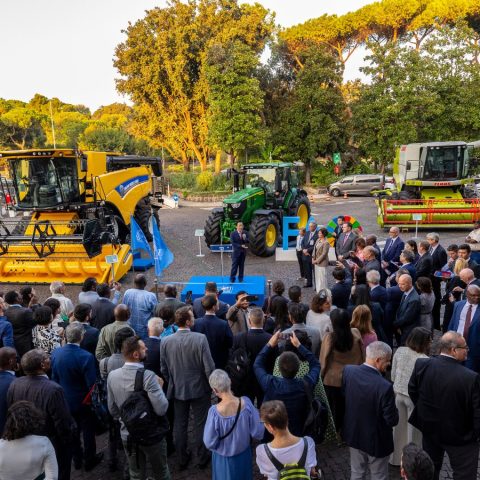
Mechanization can be a powerful force for change, but only if it is environmentally sustainable and leaves no one behind, especially women and smallholder farmers, the Director-General of the Food and Agriculture Organization of the United Nations (FAO), QU Dongyu, said as he opened FAO’s first-ever Global Conference on Sustainable Agricultural Mechanization.
With global hunger and food insecurity unacceptably high, and more than 3 billion people still unable to afford a healthy diet, transforming our agrifood systems to improve their efficiency, inclusiveness, resilience, and sustainability is more urgent than ever.
“Business as usual just simply won’t work. We need to innovate, and to be well equipped,” Qu said in his opening speech to the three-day conference, which was preceded by the FAO conference on sustainable livestock transformation.
Cutting-edge technologies such as satellite systems and GPS, robotics, artificial intelligence, and automated equipment are already shaping the future of farming. For instance, autonomous drones are monitoring crop health, robots are identifying and removing weeds and even carrying out delicate tasks such as pruning and picking fruit. Automated equipment is planting, applying fertilizers, and harvesting with remarkable precision; while sensors and satellites have revolutionized agriculture by providing data-driven insights that improve farmers’ decision-making.
Other examples of sustainable agricultural mechanization include direct planters that can place seeds through stubble and cause less soil disturbance by reducing the need for tillage, and tractors powered with methane produced from organic matter, such as from plants or manure.
Sustainability and inclusivity should be the guiding principles of all advanced and emerging technologies – meaning they should benefit everyone, most importantly the farmer. This requires ensuring that these technologies and equipment are adaptable to local contexts, as well as accessible and affordable. Above all, they cannot contribute to widening the digital divide by neglecting women and youth, Qu said.
“Historic” conference
The 27-29 September conference, held in hybrid form at FAO’s headquarters in Rome, along with the first-ever conference on sustainable livestock transformation, is “of critical importance as we bring the Four Betters to the centre of our discussions,” Qu said.
With more than 8,000 registrants from around the world, the conference is designed to provide a neutral forum for FAO Members, farmers, universities, agricultural scientists, mechanization service providers, development agencies, policymakers, extension specialists, civil society, opinion leaders and the private sector to conduct focused dialogue on the topic of sustainable agricultural mechanization.
It also aims to increase awareness of the contribution of sustainable agricultural mechanization to implementing FAO’s own Strategic Framework and attain the Sustainable Development Goals; share information and knowledge on the strategic direction and technical developments in mechanization around the world; and demonstrate FAO’s technical leadership and convening power to support its Members in leveraging sustainable agricultural mechanization. Discussions are spread over a series of thematic sessions, on topics such as Mechanization for Crop Production and Automation and Artificial Intelligence.
“Mechanization and automation are powerful forces for change, but they must be sustainable and economically viable,” Qu said.
Equipment on display
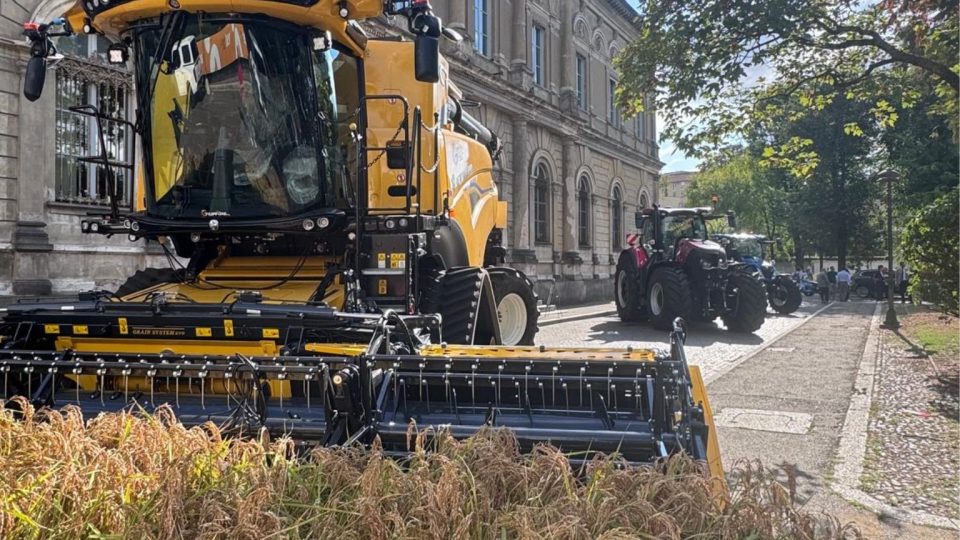
The conference is accompanied by a unique exhibition, organized in close cooperation with CEMA, the European Agricultural Machinery Association, The exhibition showcases examples of the latest technical developments in agricultural machinery across the food value chain, alongside farming equipment that has provided innovative solutions to economic, social, and environmental challenges at all scales. The focus of the exhibition is to demonstrate the role that innovative mechanization advancements play in providing sustainable and efficient farming solutions that are tailored specifically to meet farmer’s needs. The one-of-a-kind exhibit displays more than 40 different types of machinery and equipment from 13 different countries.