CNHi plants in Brazil fully sustainable
All CNH Industrial production sites in Brazil have achieved zero waste to landfill. Waste of these plants is treated and/or reused and doesn’t end up in the environment. This accomplishment acts in support of the UN’s global Sustainable Development Goals. Strengthening the circular economy is one of the great challenges of the 21st century. It […]
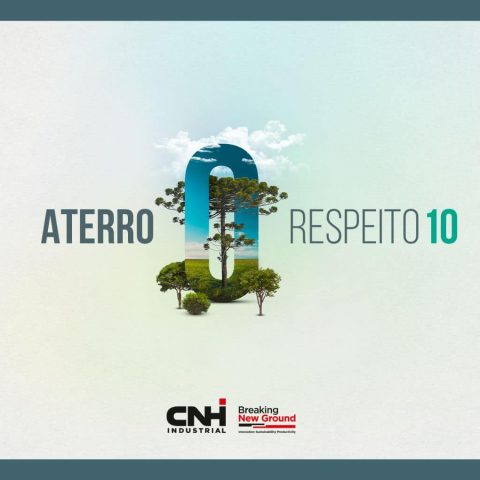
All CNH Industrial production sites in Brazil have achieved zero waste to landfill. Waste of these plants is treated and/or reused and doesn’t end up in the environment. This accomplishment acts in support of the UN’s global Sustainable Development Goals.
Strengthening the circular economy is one of the great challenges of the 21st century. It is a new form of production and consumption that leads companies and communities to rethink their relationships with products and how they manage their waste. With a focus on more sustainable processes, CNH Industrial has embraced this idea and, since 2016, has been working to cut 100% of waste from its Brazilian plants ending up in landfills.
Recently, the CNH Industrial plant in Curitiba (PR) joined the Contagem (MG), Piracicaba (SP) and Sorocaba (SP) sites, which had already achieved zero waste to landfill, reaching the company target for all production sites in Brazil.
The aim has been to maximize the re-use and correct disposal of recyclable and organic waste and to reduce – or even eliminate – the disposal of these materials into landfills or for co-processing (energy generation). Sanitary landfills are no longer suitable for this purpose. They require large tracts of land and can cause environmental impacts, such as contamination of soil, air, groundwater and sediment, as well as pose risks to wildlife and surrounding communities.
“We believe that this is an ethical, cost-effective, efficient and visionary goal to guide not only the company, but also for our employees and communities to change their ways of life and daily practices. We work to encourage natural and sustainable cycles. That means all materials are designed with an intent to reuse them and thus becoming part of the circular economy,” said Fábio Belasco, Health, Safety and Environment Manager at CNH Industrial in Latin America.
Company and communities
“Environmental legislation determines that industrial waste is sent to licensed landfills. The landfill has controlled treatment, but its useful life is temporary. We understand that all materials can be transformed and we started to send the minimum amount of waste to these places. We gradually reduced the volume until reaching zero landfill, which is the complete elimination of sending waste to landfills. It is a way of making a difference, producing efficiently, doing the right thing and making our contribution to reducing our environmental impact,” said Belasco.
The project, started at the Contagem plant in 2016, undergoing a practicality study to find alternatives for environmentally correct disposal, either through recycling or composting. It was later implemented in a phased manner at all Brazilian factories, until reaching the goal of 100% in 2023.
The solid residues from industrial activities include wood, plastic, cardboard, organic material, oil as well as others. Wood is sent for biomass production; the solvent used in painting is recycled and reused internally; organic waste is composted; the technological runoff passes through an Effluent Treatment Station (ETE) for reuse in discharges, cleaning the factory floor or testing machines. “We look for the best environmentally friendly solution for each residue. To achieve this result, these materials are separated, packaged and transported internally,” adds Belasco.
Sustainability as a strategic pillar
“We have four sustainability priorities: carbon footprint, circularity and eco-efficiency; inclusion, equity and engagement; and governance commitment. In manufacturing processes, particular emphasis is placed on increasing waste recovery and reuse. And this result is also seen internationally. The factories have also increased waste recovery (materials, water, energy) to 96.5% globally,” highlights Erika Michalik, CNH Industrial Sustainability Manager in Latin America. This year, the company was included in the S&P Global 2023 (Sustainability Yearbook with the highest score in the Machinery and Electrical Equipment Industry), in the CDP Climate Change A-List; and received an MSCI ESG rating of AAA.