AUGA closer to market launch
AUGA Tech is enlisting external financial and industry partners to bring its portfolio of “Mission no cost to nature” technologies to market. After obtaining the remaining financing, the M1 biomethane and electric tractor as well as other technology, is expected to be introduced on a commercial scale in 2026. AUGA Tech, indirectly owned by AUGA […]
By Redazione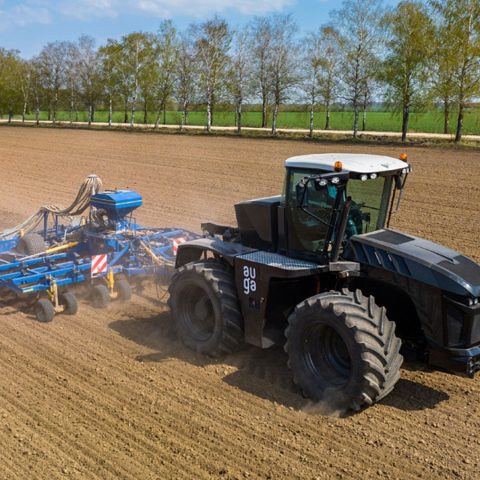
AUGA Tech is enlisting external financial and industry partners to bring its portfolio of “Mission no cost to nature” technologies to market. After obtaining the remaining financing, the M1 biomethane and electric tractor as well as other technology, is expected to be introduced on a commercial scale in 2026.
AUGA Tech, indirectly owned by AUGA group in Lithuania, is undertaking a EUR 75 million development and commercialization project. AUGA Tech submitted a EUR 60 million application to the “Billion for Business“ programme, administered by the National Promotional Institution INVEGA, to enable the development of its technology portfolio. AUGA Tech is also forming an impact-driven panel of external industry and financial partners to provide the remaining EUR 15 million and share their expertise to accelerate the technology to the market.
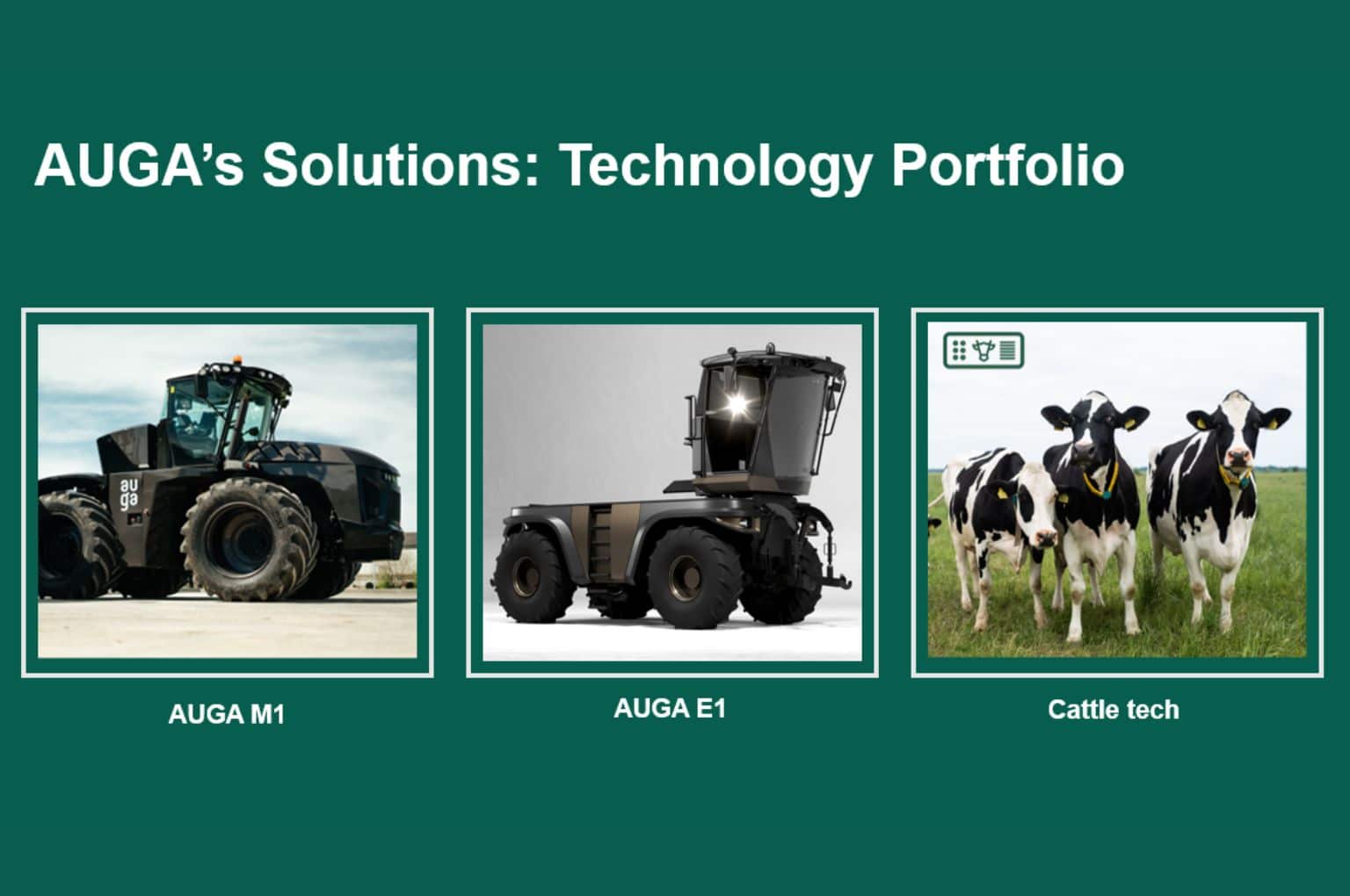
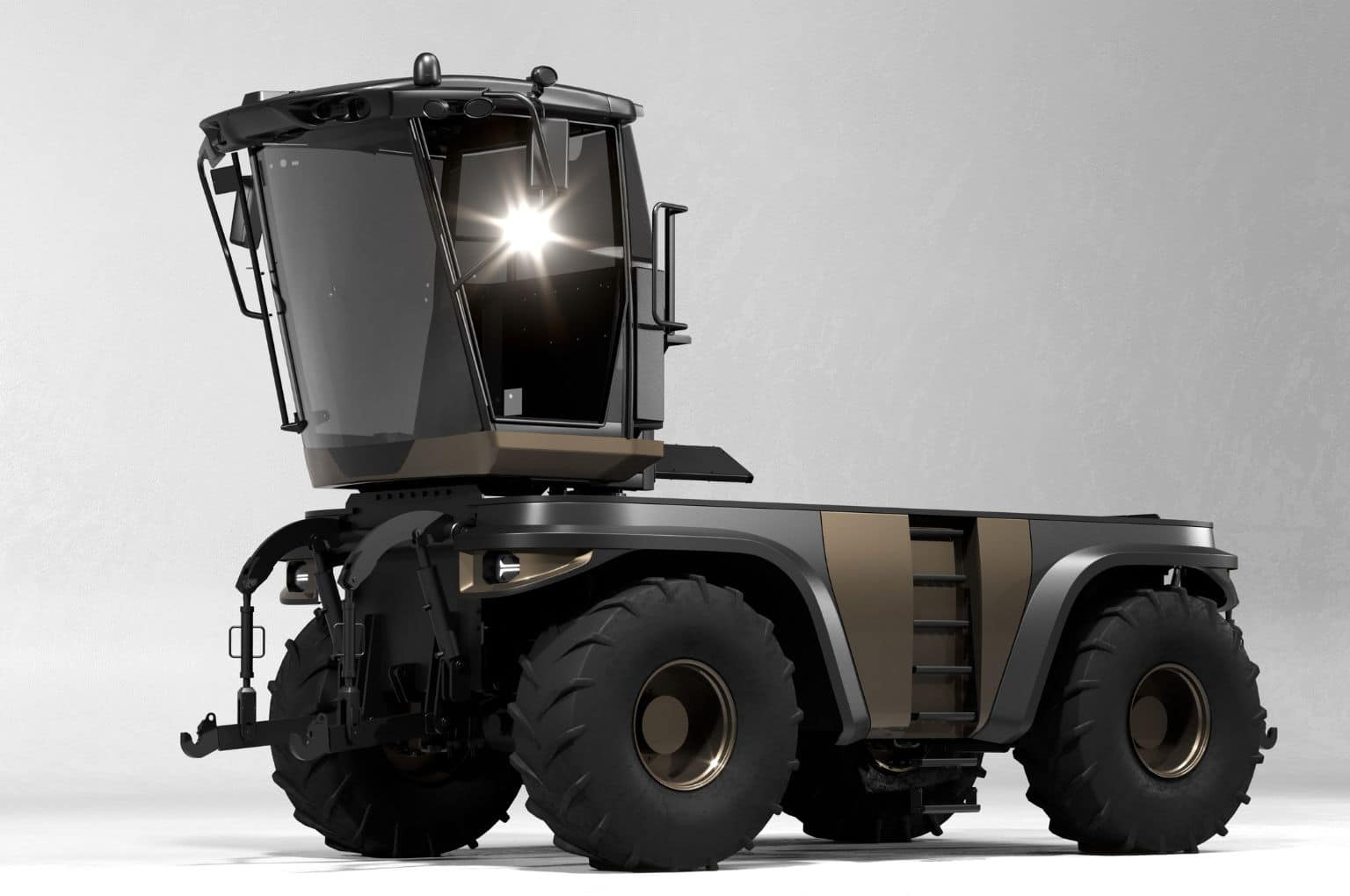
AUGA Tech’s portfolio of unique technologies includes the AUGA M1 biomethane and electric-powered tractor and other technologies: a multimodal, electric-powered agricultural platform – the AUGA E1, and sustainable feed production and feeding technology. After obtaining financing, AUGA Tech plans in the first phase of the project through 2026 to complete development and produce approximately 20 AUGA M1s, 60 AUGA E1s, and 3 sustainable feed production and feeding technology systems.
According to the World Resources Institute, amid an increasing demand for food around the world, by 2050 farmers will need to produce 56% more food to feed a population of 10 billion while also reducing emissions by 67%.
Sustainability and efficiency targets
“Only with the help of technology can we enable farmers to achieve the sustainability and efficiency targets for agricultural activities while also giving consumers the choice of a new category of food grown with less environmental impact”, says Kęstutis Juščius, director of AUGA Tech . “We have been working for years to develop such technologies, and these now have a measurable positive impact on emissions. With the support of industry partners and financiers, we will create an industry for sustainable agricultural technologies in Lithuania. They will be developed and tested in Lithuania to be used worldwide.”
The first production-scale machines will be tested and applied by AUGA. These are expected to fundamentally improve the efficiency and profitability of agricultural operations. The aim is to make the AUGA portfolio of technologies available on a cooperative basis, to about 20% of Lithuanian farmers in the first stage of commercial distribution. Access to the technology will be provided through cooperative companies which were established in 2023.
In later stages of the project, AUGA Tech plans to expand the technology to the Nordics and other EU countries that support sustainable agriculture.
AUGA Tech had already developed a prototype of the AUGA M1 biomethane and electric-powered tractor. Three tractors from the first production batch are now being tested under farm conditions for a second season.
The AUGA E1 multimodal electric-powered implement carrier is a new technology AUGA Tech is developing. With a variety of standard and by AUGA Tech customized implements, the AUGA E1, together with the AUGA M1, will be able to perform all the main farming operations. Initial testing of the AUGA E1 on farms will start later this year.
Electricity storage
According to AUGA, these technologies will improve farm productivity and economic results while eliminating the use of fossil fuels in ag machinery and replacing them with renewable energy sources: biomethane and green electricity produced in Lithuania. Tractors are used about 100 days a year in agriculture. During the remaining time, their batteries will provide additional economic benefit through electricity storage and grid balancing. Electricity is a cheaper source of energy for tractors than diesel, enabling a significant reduction in the costs of operation. The use of AUGA Tech’s developed technologies will not only reduce emissions, but also lower farmers’ production costs.
The feed production and feeding technology that AUGA Tech is developing, includes the centralized production of sustainable feed, its supply, automated feeding, and comprehensive science-based monitoring and reduction of methane and other greenhouse gas (GHG) emissions during milk production, making use of artificial intelligence.
This technology will not only improve economic indicators on livestock farms but also make it possible to produce 1 liter of raw milk with less than 1 kg of CO2 emissions.
“With our technologies, we are addressing the global challenge of how farmers can feed 10 billion people in the future while reducing agricultural emissions to just a third of what they are today. Successful implementation of the “Mission no cost to nature” project will create immense benefits not only for the world but also for AUGA shareholders who believe in our long-term strategy,” Kęstutis Juščius concludes.